Most DTC brands treat community as a soft metric. Something the social team owns, something that lives next to engagement and sentiment, something that is nice to have once the real growth work is done. That framing is exactly why so many brands plateau. In 2026, community is not a retention enhancement. It is a primary growth engine, and the brands that understood that early are the ones quietly compounding while everyone else fights over the same expensive ad impressions.
Here is the case for building an owned community, the numbers that make it the highest-leverage retention move available, the mistakes that waste the budget, and the exact sequence to build one without breaking what already works.
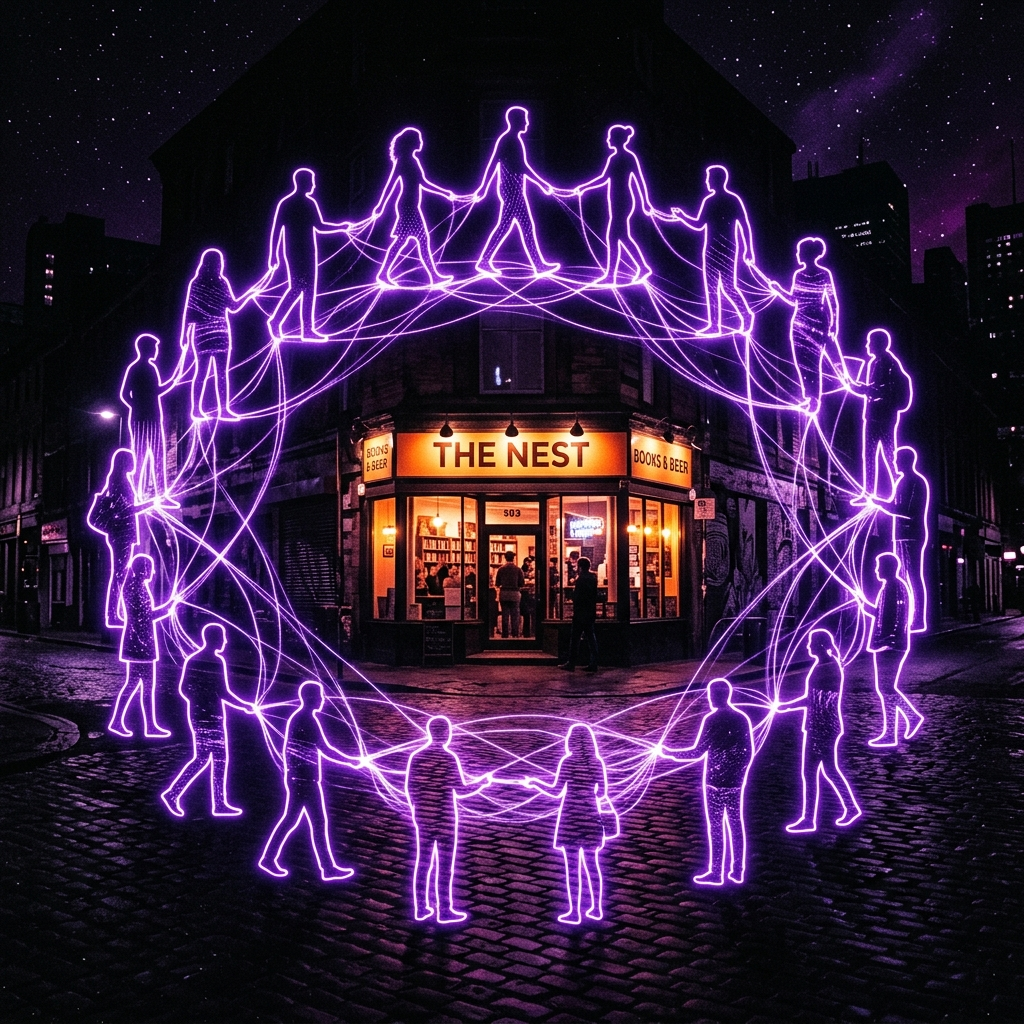
Why Community Became the Moat in 2026
Two forces collided. Customer acquisition cost rose roughly 40 to 60% between 2023 and 2025, and the average DTC brand now loses money on the first order. At the same time, iOS privacy changes and rising CPMs turned platform dependency into a survival risk. If your entire model is buy traffic, convert, repeat, you are renting your growth from Meta and Google and paying a higher rent every quarter.
An owned community breaks that dependency. It is an asset you can activate without paying for reach. Returning customers already generate around 60% of DTC revenue and convert at 60 to 70% compared with 5 to 20% for cold visitors. Community is the layer that turns more first-time buyers into that returning 60%, and it does it with social pull rather than discount bribery.
Paid channels are most valuable not as your primary acquisition mechanism but as the distribution channel that drives new audiences into owned programmes where the relationship can actually be built. The direct relationship is the asset worth building. Everything else is rented.
The Numbers That Make the Case
Community is not a feeling. It is one of the most measurable retention levers you have. Across leading DTC brands running community commerce, members deliver 65 to 96% higher lifetime value and 29 to 56% higher purchase frequency than non-community customers. Put that next to a typical loyalty programme, which lifts repeat purchase by 10 to 20% for enrolled members, and the gap is obvious.
The scale economics surprise most founders. An engaged email list of 50,000 subscribers can generate 500,000 to 1,000,000 GBP a year through sequences, launches, and re-engagement at near-zero marginal cost per send. A 5,000-person community can produce 200,000 GBP or more annually through member-exclusive launches and referrals. Referral programmes alone grow email lists 25 to 35% faster, and referred customers spend around 25% more on average.
The benchmark to hold yourself against: the average DTC brand retains 28 to 31% of customers, while top performers with strong lifecycle and community programmes hit 45 to 55%. That gap is the prize. It is also almost entirely a retention and community problem, not an acquisition one.
Where Brands Get Community Wrong
Most failed community efforts fail for the same handful of reasons. Recognising them up front saves months of wasted effort.
Building the platform before the basics work
The single most common mistake is sequencing. A brand that has not yet optimised its post-purchase email flow should not be standing up a Discord server. Building a retention stack is a sequencing problem, and a community platform sits near the top of the stack, not the bottom. If your welcome flow, review capture, and second-purchase nudge are not working, fix those first. Community amplifies a working retention system. It cannot replace a broken one.
Confusing a social following with a community
A large, passive audience on Instagram is not a community. It is rented attention that converts at a fraction of an engaged owned audience. A smaller, highly engaged community converts at 3 to 5x the rate of a large passive one. Gymshark's lesson for smaller brands is to build community before reach, even if that means slower growth at first. Depth compounds. Vanity reach does not.
Running a loyalty programme with no delivery system
Loyalty programmes fail without retention infrastructure because the programme is the incentive and the retention system is the delivery mechanism. Points and tiers do nothing if you have no flows, segmentation, or community space to activate them through. Building the incentive without the distribution is like designing a product and never building a way to ship it.
Treating it as a discount channel
The fastest way to kill a community is to make it just another place you push promotions. Community members stay for access, status, early launches, and genuine input into the brand. Lead with discounts and you train people to wait for the next code, which erodes margin and attracts your least loyal customers. The pull should be belonging and exclusivity, not price.
The Sequence to Build One That Compounds
Community is built in order, not all at once. This is the sequence I use with brands, weighted toward what produces the most uplift per unit of effort at each stage.
Fix the owned foundation first
Before any community platform, make sure your email and SMS capture and your post-purchase flow are working. The biggest single lever in retention is timing: customers who place a second order within 60 days of their first are 3x more likely to become long-term buyers. Engineer your flows around that window before you build anything social on top.
Create a reason to belong, not just to buy
Define what membership actually gives people: early access to launches, members-only products, a direct line to the founder, a say in what gets made next. The strongest communities are built on access and status, not on a recurring discount. Write the membership promise down in one sentence before you choose a tool.
Choose the lightest space that fits your customer
You do not need a custom platform on day one. A private Facebook Group or a Discord server for your best customers is enough to share exclusive content, run launches, and gather feedback. Match the channel to where your customers already are. The tool matters far less than the consistency of showing up in it.
Use paid media to feed the community, not bypass it
Repoint part of your acquisition spend at driving new buyers into owned channels rather than chasing one-off conversions. Every ad should have a path into your list, your group, or your loyalty programme. This turns linear ad spend into compounding owned-audience growth and steadily lowers your blended acquisition cost over time.
Activate with launches, referrals, and member input
Run member-exclusive drops, two-sided referral rewards, and regular requests for feedback that visibly shape the brand. Referral programmes grow lists 25 to 35% faster and bring in customers who spend around 25% more. Member-exclusive launches give the community a reason to stay engaged between purchases, which is where lifetime value is actually won.
Measure on LTV and frequency, not likes
Track community members as a cohort against everyone else. Watch repeat purchase rate, purchase frequency, and lifetime value for members versus non-members. If your community is working, those three numbers separate clearly within 90 days. If they do not, your community is a content channel, not a retention engine, and the sequence above needs revisiting.
The brands winning in 2026 rebuilt their model around owned channels that generate compounding returns, rather than linear returns from media spend. Community is the highest-leverage, most durable, and most underused layer of that model. The cost of building it is patience. The cost of not building it is paying rising rent on rented attention forever.
What This Looks Like in Practice
A wellness brand I worked with was spending nearly all of its energy on acquisition, with retention treated as an afterthought. Their repeat purchase rate sat in the mid-twenties and their blended CAC was climbing every month. They had a sizeable Instagram following and assumed that was their community. It was not. It was reach they paid to access.
We fixed the post-purchase flow first, compressing the second-purchase window, then stood up a small members space for their best customers with early access to new flavours and a direct feedback loop into the product roadmap. We repointed a slice of ad spend at list growth instead of one-off sales. Within a quarter, the members cohort was buying noticeably more often than everyone else, and the brand had an owned audience it could launch into without spending a penny on reach.
Acquisition spend did not go up. Retention did. That is the whole point of a moat: it makes everything you already do worth more.
Inside the system
How we build this for brands
This is the part most brands never see. For portfolio brands we run a series of specialised agents, each trained on the brand's voice and thousands of real customer touch points, that go out and build relationships with the ideal audience and initiate the first contact. A second layer of agents watches the replies and writes a genuinely personalised email for each person, so nothing reads like a template and no one slips through the cracks.
From there the system invites the right customers, not everyone, to small in-person moments: pop-up tastings, run clubs, sauna sessions, whatever fits the brand. The owned-audience and lifecycle flows behind it are built and deployed in Klaviyo by AI, and the same engine mines customer reviews to learn what the community actually responds to. Part of this runs live for portfolio brands today; the full system is what we design and deploy when we take a brand on.
Growth Audit
Find Out Where Your Retention Is Leaking
I will review your retention stack, show you where first-time buyers are slipping away, and give you a clear sequence to build an owned audience that compounds. No pitch deck. No fluff. Just the numbers and what to do about them.
Book Your AuditFrequently asked questions
What is community building for DTC brands?
Community building is creating an owned space where customers connect with the brand and with each other, rather than only transacting. That can be an email and SMS list, a private Discord or Facebook Group, a loyalty programme, or a members area. The point is a direct relationship you control and can activate without paying a platform for every impression. Community members typically deliver 65 to 96% higher lifetime value and 29 to 56% higher purchase frequency than non-members.
Does community building actually improve retention?
Yes, and by more than most tactics. Returning customers already generate around 60% of DTC revenue and convert at 60 to 70% versus 5 to 20% for new visitors. Community members show 29 to 56% higher purchase frequency, well above the 10 to 20% lift typical of a standard loyalty programme. Community adds a social reason to stay, not just a financial one.
Owned community or social media following: which matters more?
Owned community, because you control it. Rising CPMs and privacy changes made platform dependency a survival risk. A social following is rented attention you reach only when you pay or the algorithm allows. An owned list or group is an asset you activate at near-zero marginal cost. Use paid social to acquire and to funnel people into owned channels, then build the relationship where you own it.
How big does a DTC community need to be to matter?
Smaller than founders assume. An engaged 5,000-person community can generate 200,000 GBP or more a year through member-exclusive launches and referrals. An engaged 50,000-subscriber email list can drive 500,000 to 1,000,000 GBP annually at near-zero marginal send cost. A small engaged audience converts at 3 to 5x a large passive one, so depth beats reach.
When should a DTC brand start building community?
After the basics work, not before. Building a retention stack is a sequencing problem. If your post-purchase flow is not yet capturing the 60-day second-purchase window, fix that first. Once email and review capture are solid, layer SMS, then a loyalty or community platform, then cohort analytics. Building a community platform on a broken post-purchase flow is the most expensive mistake brands make here.
About the author
Caner Veli is a DTC operator who has helped 350+ brands fix broken growth engines. He built Liquiproof from zero to 3,000+ global retailers in under 6 years. He now runs the same playbook, supported by AI systems he built himself, for DTC and CPG brands.